YouthTruth Helps Capture the Immigrant Student Experience
In 2023, YouthTruth partnered with Re-Imagining Migration and Harvard’s Immigration Initiative to produce a climate survey.

79 Results Found
In 2023, YouthTruth partnered with Re-Imagining Migration and Harvard’s Immigration Initiative to produce a climate survey.
In response to a lack of firsthand data about how students were faring during the COVID-19 pandemic, YouthTruth launched the Students Weigh In project.
Student experiences–as measured by factors such as academic challenge, culture, and relationships–are variously predictive of ninth-grade retention, reading proficiency, math proficiency, absenteeism, and suspension rates.
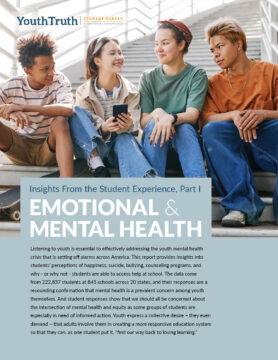
The findings in our Emotional and Mental Health report were published across the country.
Listening to youth is essential to effectively addressing the youth mental health crisis that is setting off alarms across America. This report provides insights into students’ perceptions of happiness, suicide, bullying, counseling programs, and why – or why not – students are able to access help at school.
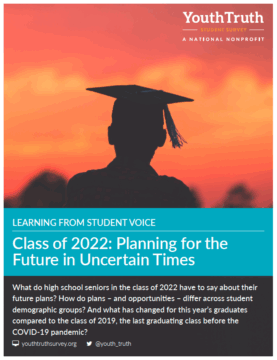
What do high school seniors in the class of 2022 have to say about their future plans? How do plans – and opportunities – differ across student demographic groups? And what changed for 2022 graduates compared to the class of 2019, the last graduating class before the COVID-19 pandemic?
Teacher expectations and the belief that each student has the capacity to learn and grow is essential to supporting individual student achievement and equitable learning environments.
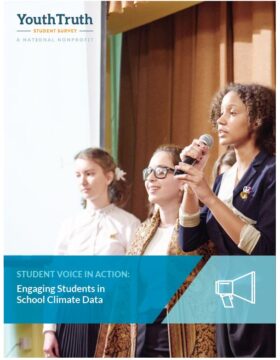
Research shows that student perception is linked to both academic outcomes and teacher quality, and that student feedback should be a critical component of school improvement initiatives. Incorporating the unique perspectives of students into decision-making creates happier, healthier school systems with higher academic achievement.
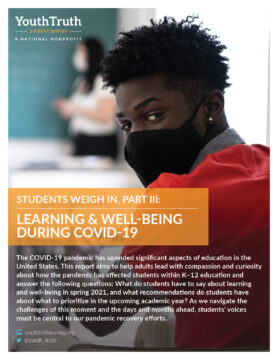
The COVID-19 pandemic has upended significant aspects of education in the United States. This report aims to help adults lead with compassion and curiosity about how the pandemic has affected students within K–12 education and answer the following questions: What do students have to say about learning and well-being in spring 2021, and what recommendations do students have about what to prioritize in the upcoming academic year?
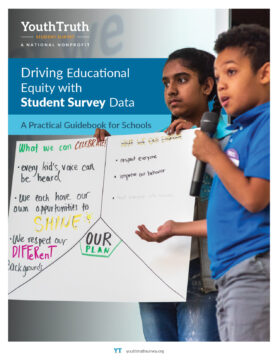
The deep-seated power dynamics and systemic racism long embedded in our educational institutions have silenced too many voices. To make our local school systems more just — especially racially just for Black students — young people’s voices and leadership must be at the center. When groups of students experience aspects of their learning environment less positively than other groups, this an equity issue.
This site uses third parties to host functionality and monitor the functioning and activity of the website. By clicking “continue” and navigating through this website you consent to the collection of, and disclosure to third parties, data related to your use of the website.